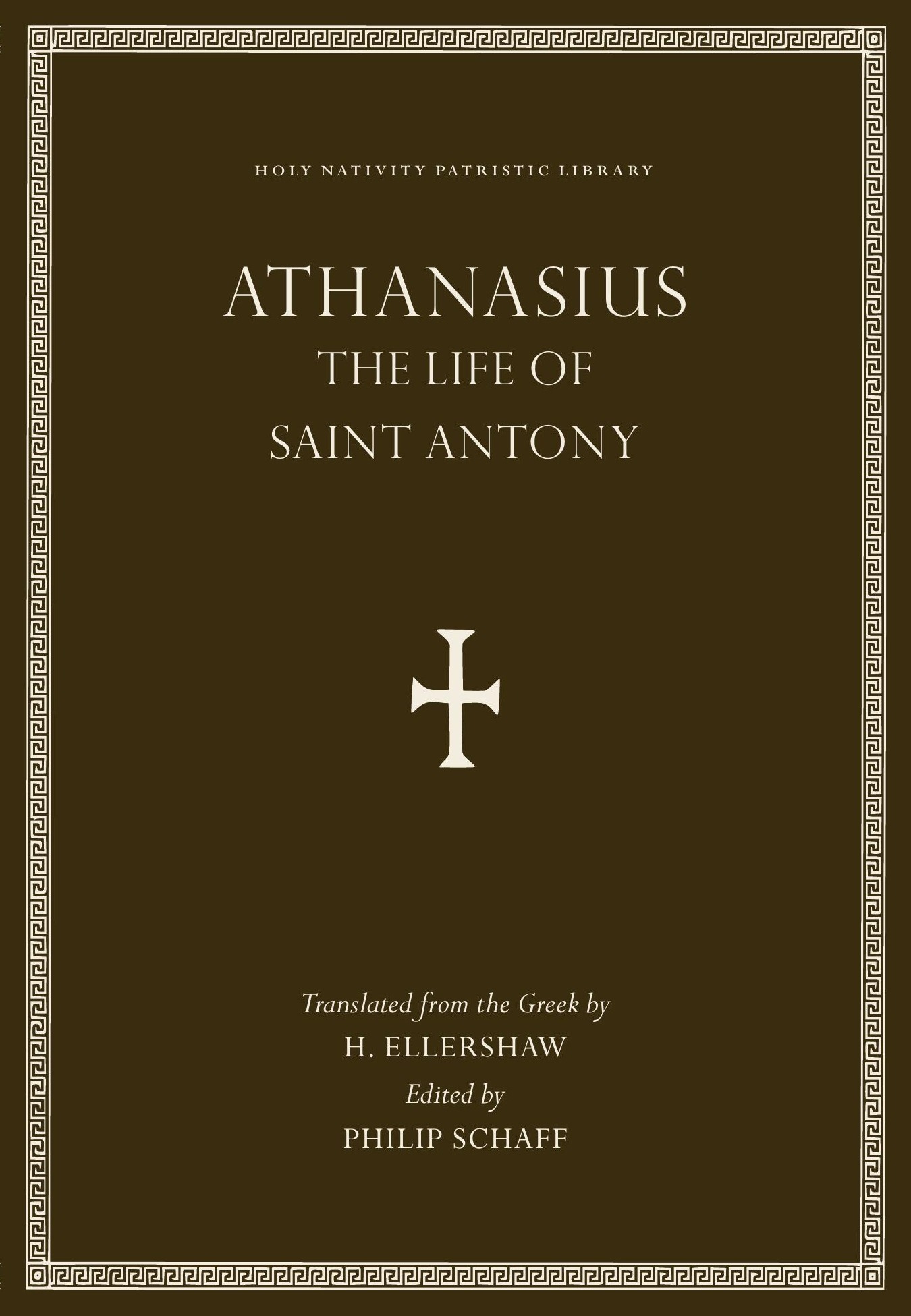
“The book that launched a thousand monasteries.”
Written between 356 and 362, the Vita Antonii is Athanasius of Alexandria’s biography of Antony the Great—the Egyptian hermit whose radical withdrawal into the desert became the founding act of Christian monasticism. Composed at the request of monks in foreign lands seeking a “pattern of discipline,” the work spread rapidly through the ancient world: Jerome modeled his own saints’ lives upon it, and Augustine’s Confessions records reading the Vita as the decisive moment of his conversion.
In these pages, Antony renounces his inheritance, retreats to tombs and a ruined desert fort, engages in prolonged spiritual combat with demons, emerges after twenty years of solitary prayer unchanged in body and radiant in soul, and becomes the counselor of monks, bishops, and emperors—including Constantine himself. He confutes pagan philosophers not by argument but by healing the possessed before their eyes, and dies at the age of 105, having asked that his burial place remain secret.
The standard scholarly English translation since 1892.
Many modern reprints of the Church Fathers are hastily scanned, poorly formatted reproductions—illegible text copied from websites, missing footnotes, and no scholarly apparatus. A text that has shaped seventeen centuries of Christian monasticism, Orthodox spirituality, and Western religious life merits greater care.
The 94 Sections of the Vita
For Whom This Edition Is Prepared
The Holy Nativity Press Edition
The Holy Nativity Patristic Library publishes the Early Church Fathers as individual annotated pocket editions—each with scholarly footnotes, subject and scripture indices, and professional typesetting.